Is Your Organisation Preventing Cyber Threats or Simply Responding to Them?
Cyber attacks are no longer a matter of if, but when.
Yet many Australian organisations still take a reactive approach to cyber security, responding only after something has gone wrong. An employee clicks a phishing email. A server unexpectedly fails. A ransomware attack locks critical business data. Only then does the organisation begin to act.
Unfortunately, by the time a cyber incident becomes visible, the financial, operational and reputational damage may already be underway.
Today’s cyber landscape demands a different approach.
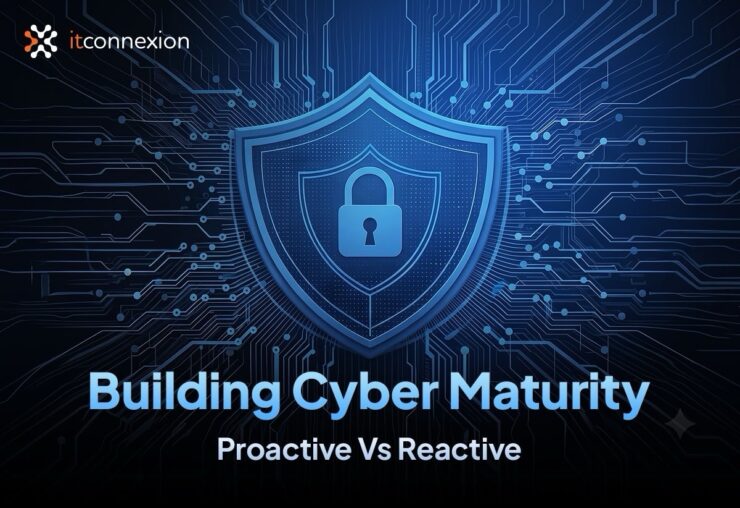
Leading organisations are shifting their focus from simply protecting their systems to building cyber maturity, developing the people, processes and technology needed to identify risks early, minimise disruption and recover quickly.
The question is no longer:
“Do we have cyber security?”
The better question is:
“How cyber mature is our organisation?”
Executive Summary
In this article you’ll learn:
- Why reactive cyber security is becoming increasingly costly.
- The difference between reactive security and cyber maturity.
- How proactive organisations reduce business risk and improve resilience.
- The six pillars that underpin cyber maturity.
- Practical next steps to strengthen your organisation's cyber resilience.
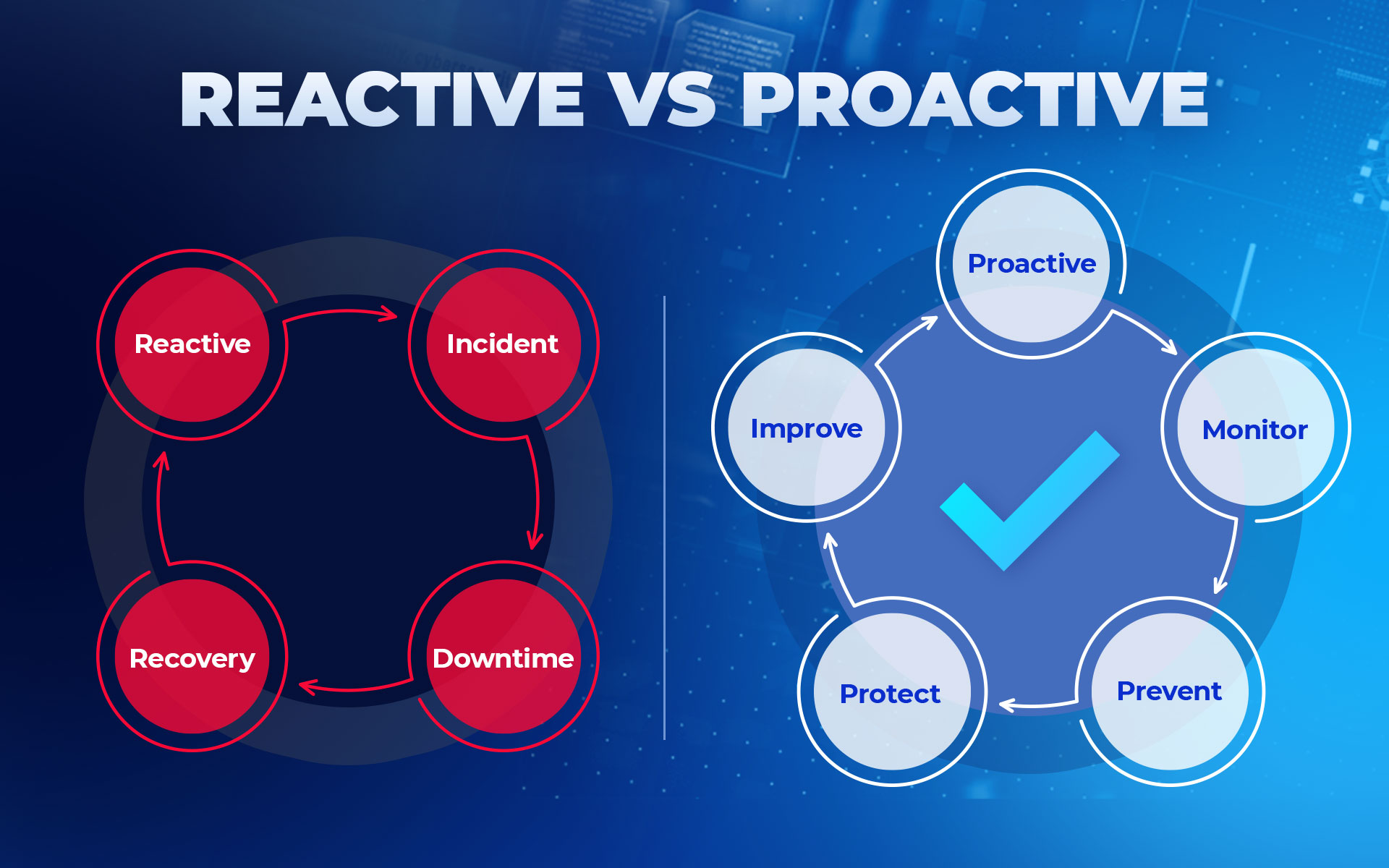
Reactive Security vs Proactive Cyber Maturity
Many organisations invest in antivirus software, firewalls and backups and assume they’re well protected.
While these technologies remain important, they represent only part of an effective cyber strategy.
Reactive security focuses on responding after an incident occurs.
Cyber maturity focuses on reducing the likelihood and impact of incidents before they happen.
| Reactive Security | Proactive Cyber Maturity |
|---|---|
|
Respond after an attack |
Prevent attacks before they happen |
|
Emergency IT spending |
Planned technology investment |
|
Downtime and disruption |
Business continuity and resilience |
|
Manual incident response
|
Continuous monitoring and improvement |
|
One-off fixes
|
Ongoing cyber maturity program |
|
Higher long-term costs |
Lower business risk |
The difference isn’t simply technical.
It’s the difference between constantly putting out fires and building an organisation that’s prepared for whatever comes next.
Why Cyber Maturity Matters More Than Ever
Australian organisations are embracing cloud services, hybrid work, AI-powered productivity tools and digital transformation faster than ever before.
These innovations create enormous opportunities, but they also expand your cyber risk.
At the same time, cyber criminals are becoming more sophisticated, increasingly targeting organisations through identity theft, phishing, AI-generated scams and ransomware.
Building cyber maturity enables organisations to:
- reduce cyber risk
- strengthen business continuity
- improve operational resilience
- support compliance obligations
- protect customer trust
- confidently adopt emerging technologies
Cyber maturity isn’t just an IT objective.
It’s a business capability.
The Hidden Cost of Reactive Security
When organisations wait until something breaks, the real costs often extend far beyond repairing systems.
A reactive approach commonly leads to:
Productivity Loss
Employees cannot work when systems become unavailable.
Emergency IT Spending
Urgent recovery projects almost always cost significantly more than planned improvements.
Downtime
Even a few hours of disruption can delay projects, interrupt customer service and impact revenue.
Reputation Damage
Customers expect organisations to protect their information. Trust can take years to build and moments to lose.
Compliance Risk
Increasing regulatory expectations mean organisations must demonstrate they are actively managing cyber risk, not simply reacting to incidents.
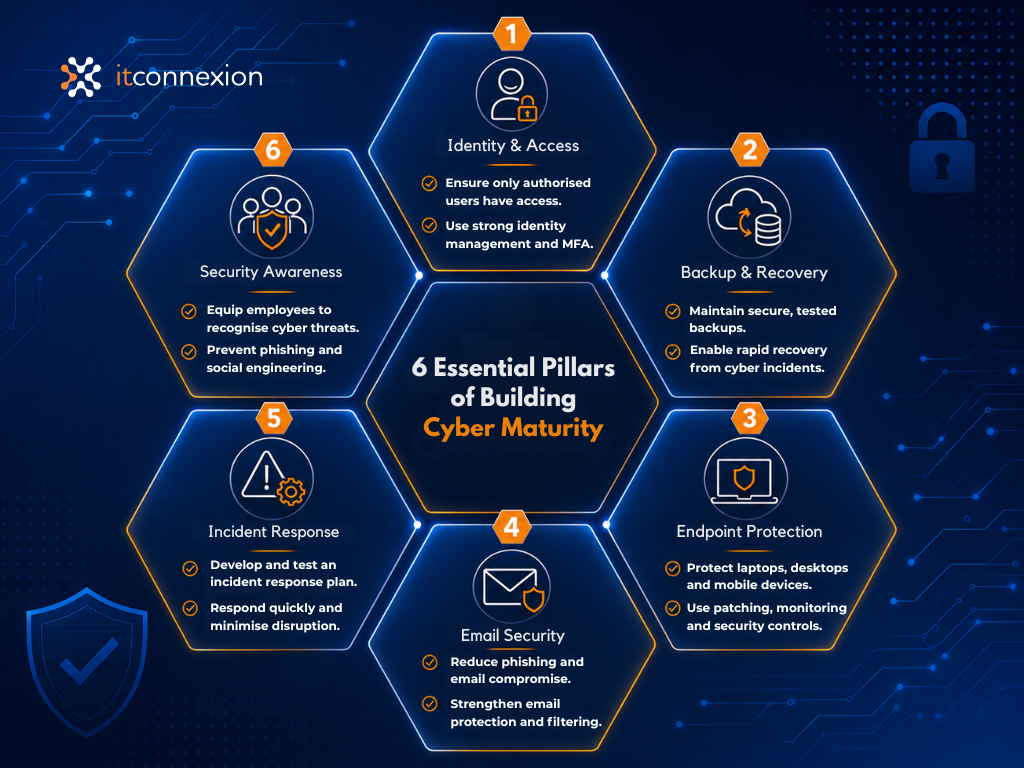
Building Cyber Maturity: The Six Essential Pillars
Cyber maturity isn’t achieved by purchasing more technology.
It’s built through continuous improvement across people, processes and technology.
The six pillars include:
1. Identity & Access
Ensure only authorised users have access to critical systems through strong identity management and Multi-Factor Authentication.
2. Backup & Recovery
Maintain secure, tested backups that enable rapid recovery from cyber incidents or system failures.
3. Endpoint Protection
Actively manage laptops, desktops and mobile devices through automated patching, monitoring and security controls.
4. Email Security
Reduce phishing and business email compromise with advanced email protection and filtering.
5. Incident Response
Develop and regularly test an incident response plan so your organisation can respond quickly and minimise disruption.
6. Security Awareness
Equip employees to recognise phishing, social engineering and AI-powered cyber threats before they become incidents.
Continue Learning
Want to explore these six pillars in more detail?
→ Watch our current Digital Learning Guide: Essential Eight in Simple Explanation
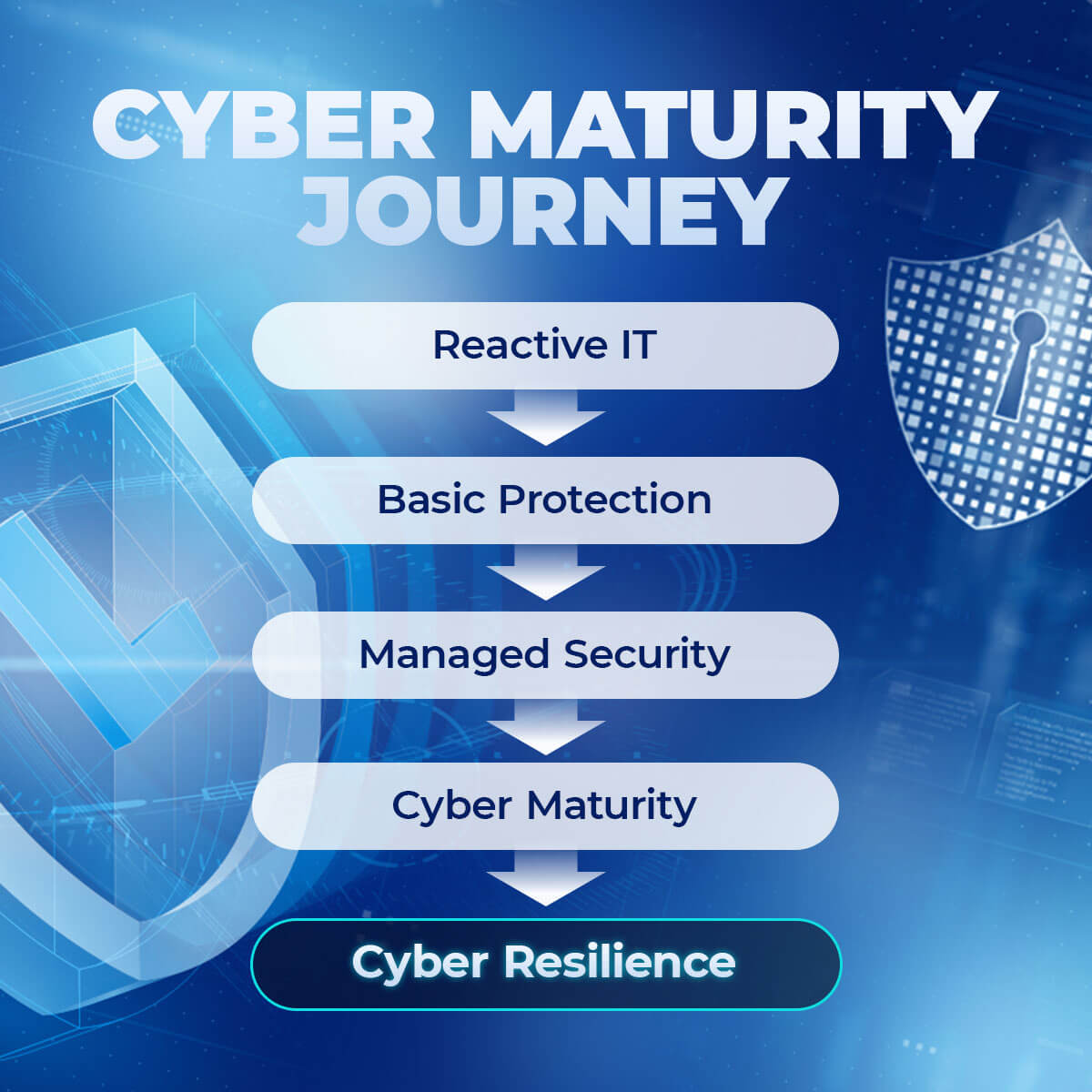
Cyber Maturity Is a Journey, Not a Destination
Cyber maturity isn’t a project you complete once.
Threats evolve.
Technology changes.
Businesses grow.
New regulations emerge.
Organisations with higher cyber maturity continually assess, improve and adapt their security posture to stay ahead of changing risks.
Rather than asking:
“How do we recover after an attack?”
Cyber mature organisations ask:
“How do we reduce the likelihood and impact of an attack before it happens?”
Quick Self-Assessment
Ask yourself:
- Is Multi-Factor Authentication enabled for every user?
- Are backups regularly tested?
- Are your endpoints automatically patched?
- Do you have advanced email protection?
- Does your organisation have a documented incident response plan?
- Are employees regularly completing cyber awareness training?
If you answered “No” to two or more questions, your organisation may benefit from reviewing its current cyber maturity.
Related Resources
To continue strengthening your cyber resilience, explore these resources from ITConnexion:
- Digital Learning: Essential Eight in Simple Explanation
- One Click Too Many: Cyber Security Awareness
- Three Pillars of Business Continuity for Cyber Resilience
- Managed Detection & Response (MDR)
- Managed IT Services
- Microsoft 365 Security Solutions
- Backup as a Service (BaaS)
- Disaster Recovery as a Service (DRaaS)
Frequently Asked Questions
What is cyber maturity?
Cyber maturity measures how effectively an organisation manages cyber risk across its people, processes and technology. It goes beyond security tools to include governance, resilience, awareness and continuous improvement.
What is the difference between cyber security and cyber maturity?
Cyber security focuses on protecting systems and data using technologies and controls. Cyber maturity measures how well those controls are managed, maintained and continuously improved across the organisation.
Why is proactive cyber security important?
A proactive approach helps identify vulnerabilities before they become incidents, reducing downtime, business disruption and long-term costs while improving resilience.
How can organisations improve cyber maturity?
Organisations should regularly assess cyber risks, strengthen identity security, maintain tested backups, improve endpoint protection, train employees and continuously review their cyber security strategy.
Ready to Build a More Cyber Mature Organisation?
Every organisation is at a different stage of its cyber maturity journey.
The important first step is understanding where you stand today.
Whether you’re reviewing your cyber strategy, adopting AI, planning infrastructure upgrades or simply looking to improve resilience, an independent assessment can identify strengths, highlight gaps and provide a practical roadmap for improvement.
Cyber Maturity Assessment
ITConnexion helps Australian businesses, not-for-profits and government organisations strengthen cyber resilience through proactive managed IT services, cyber security expertise and strategic technology guidance.
Our Cyber Maturity Assessment will help you:
- Assess your current cyber maturity
- Identify your highest cyber risks
- Review your existing security controls
- Prioritise practical improvements
- Develop a roadmap towards stronger cyber resilience
Ready to Move Beyond Reactive Security?
Book your Cyber Maturity Assessment today and discover how ITConnexion can help your organisation become more resilient, secure and prepared for tomorrow’s cyber threats.
Contact ITConnexion today to schedule your assessment.